
-


-


-


-


whatsapp

-
WeChat

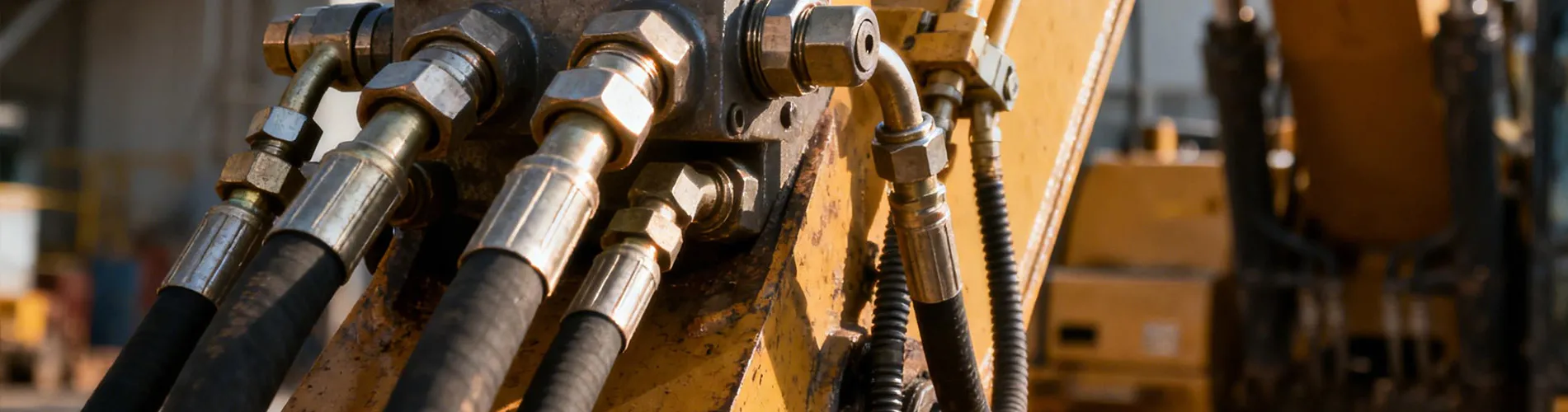
Heat-resistant hydraulic hoses: reliability in extreme conditions
2026-03-24
content
- Introduction: The Critical Role of Hydraulics in Modern Industrial Systems
- The physics of heat and the vulnerability of standard hydraulics
- Construction and materials: Secrets of heat resistance
- Classification and standards: How to choose the right solution
- Applications: Where reliability is critical
- Choosing a reliable partner: Solutions from Zhengzhou Haida Hydraulic Technology LLC
- Cost efficiency and risk management
- Installation, operation and maintenance
- The Future of Technology: Where is the Industry Heading?
- Conclusion: Investing in Security and Stability
Introduction: The Critical Role of Hydraulics in Modern Industrial Systems
Modern industry, construction, mining and aerospace are unthinkable without reliable hydraulic systems. These systems are the “muscles” of heavy machinery, converting fluid energy into powerful mechanical movement. However, the efficiency of the entire system directly depends on the weakest link - the element connecting the pumps, cylinders, valves and distributors. This element is a hydraulic hose.
Under standard operating conditions, ordinary rubber hoses cope with their tasks quite satisfactorily. But what happens when equipment operates near foundry furnaces, deep in hot mines, near hot engine exhaust systems, or in high fire risk areas? Here extreme temperatures come to the fore, capable of destroying a standard polymer shell in a matter of minutes, leading to depressurization of the system, fire and catastrophic downtime.
It is in such scenarios that they become indispensableheat resistant hydraulic hoses. These are not simply modifications to standard products, but highly engineered products designed using advanced materials and engineering to maintain integrity and functionality in harsh thermal environments. In this article, we take an in-depth look at the design, materials, applications, safety standards and economics of dedicated heat-resistant solutions to help engineers and purchasers make the right choice for their projects.
The physics of heat and the vulnerability of standard hydraulics
To understand the need for specialized solutions, you must first understand how heat affects traditional hydraulic hoses. A standard hydraulic hose typically consists of three main layers: an inner tube, a reinforcement layer (braid or coil), and an outer casing. Most standard hoses are made from synthetic rubber (NBR, SBR) or thermoplastic materials (polyurethane, nylon).
When exposed to temperatures exceeding the design range (usually -40°C to +100°C, maximum up to +125°C for some species), irreversible chemical and physical processes begin:
- Elastomer degradation:Rubber loses plasticizers, becomes brittle and begins to crack. This phenomenon is known as thermal aging. Cracks in the outer shell allow oxygen and moisture access to the reinforcing layer.
- Corrosion of reinforcement:A steel braid or spiral, lacking protection, quickly corrodes under the influence of condensation and aggressive environments, which sharply reduces the operating pressure of the hose.
- Softening the inner tube:At high temperatures, the inner tube can soften, which leads to its deformation under pressure, detachment from the fittings and rubber particles entering the hydraulic fluid, clogging filters and valves.
- Change in oil viscosity:Although this is a property of the fluid and not the hose, overheating the oil accelerates its oxidation, the formation of sludge and acids, which, in turn, have a more aggressive effect on the hose materials from the inside.
The critical point is the risk of fire. Hydraulic oil sprayed through a microcrack in a superheated hose near a spark or open flame instantly ignites, creating a torch that can destroy expensive equipment and endanger the lives of personnel. Statistics of industrial accidents show that a significant part of fires on mobile equipment and stationary installations are associated precisely with the rupture of hydraulic lines in high temperature zones.
Therefore, the use of conventional hoses in such conditions is not just a violation of the manufacturer’s recommendations, it is a direct threat to the safety and economic stability of the enterprise. This is where they take the stageheat resistant hydraulic hosescreated to counteract these destructive forces.
Construction and materials: Secrets of heat resistance
What allowsheat resistant hydraulic hoseswithstand temperatures that turn ordinary rubber into carbon? The answer lies in the unique combination of materials of each layer of the structure and special protective coatings.
Inner tube: Chemical inert
The heart of a heat-resistant hose is its inner tube. Instead of standard nitrile rubber, fluoroelastomers (FKM, known as Viton®), perfluoroelastomers (FFKM) or special thermoplastic polymers such as PTFE (polytetrafluoroethylene, Teflon) are often used here.
PTFE is the leader in this category. It is capable of continuous operation at temperatures up to +260°C and can withstand even higher temperatures for short periods. PTFE is chemically inert, does not react with most hydraulic fluids, including synthetic fire retardant fluids (HFDU, HFC), and has an extremely low coefficient of friction, which improves fluid flow and reduces pressure loss. Fluoroelastomers also provide excellent temperature resistance up to +200°C and are highly resistant to chemical attack.
Reinforcing layer: Maintaining strength
High temperatures can reduce the yield strength of metals. Heat resistant hoses use high quality stainless steel for braiding or spiral wrapping. Stainless steel not only retains its strength under heat better than carbon steel, but it also has its own corrosion resistance, which is critical if the outer protection is damaged. The reinforcement design (one, two or four spirals) is calculated taking into account the expansion of materials when heated to prevent delamination of the layers.
Outer shell and additional protection
The outer layer of the heat-resistant hose is made of silicone rubber, special fluorine rubber or impregnated fiberglass braids. Silicone remains elastic over a wide temperature range (from -60°C to +200°C and above). However, in extreme cases where direct contact with an open flame is possible, rubber alone is not enough.
Multilayer protection systems are used here:
- Fire Sleeves:These are fiberglass outer covers coated with a layer of silicone or vermiculite. They create a barrier that can withstand direct exposure to flames of up to 1100°C for a certain period of time (usually 15-30 minutes), preventing the hose itself from reaching a critical point.
- Heat reflective screens:Aluminized coatings that reflect radiant heat, preventing it from penetrating the hose body.
- Abrasion-resistant covers:Often combined with thermal protection, since in industrial environments thermal exposure is often accompanied by mechanical friction.
The combination of these materials makesheat resistant hydraulic hosesa real shield that protects the hydraulic system from thermal aggression.
Classification and standards: How to choose the right solution
The market offers many options for heat-resistant solutions, and choosing the right product requires an understanding of the classifications and relevant standards. The wrong choice can lead to the same consequences as using a regular hose.
Heat Resistance Levels
Conventionally, all heat-resistant hoses can be divided into three categories:
- High temperature resistant hoses:Designed to operate in conditions of elevated background temperatures (up to +150…+175°C). Usually have a shell made of silicone or fluorine rubber. Suitable for internal combustion engines, compressor stations.
- High temperature hoses (PTFE/PTFE):Operating range up to +260°C and above. Used in the chemical industry, systems with hot media, and molds.
- Fire Resistant Systems:Designed to protect against direct contact with fire and molten metal. This includes hoses complete with Class A, B or C fire hoses according to various national standards.
International standards and certification
When choosingheat resistant hydraulic hosesit is necessary to focus on authoritative standards that guarantee the declared characteristics:
- SAE J1508/SAE J1942:American standards governing the requirements for hydraulic hoses, including temperature conditions.
- EN 853 / EN 856:European standards for rubber-hydraulic hoses. Although they describe general requirements, manufacturers often specify compliance with extended temperature classes in the specifications.
- ISO 15540 and ISO 15541:International standards defining fire resistance test methods. These include open flame resistance tests and fire resistance under pressure tests. Hoses that pass these tests are marked accordingly.
- MSHA (Mine Safety and Health Administration):The mining industry has strict fire resistance requirements, especially in underground mines where the risk of mineral oils catching fire is extremely high.
It is important to remember that having a certificate does not mean universality. The engineer must compare the specific operating conditions (maximum temperature, duration of exposure, type of heat source - convection, radiation or direct contact) with the parameters of the certified product.
Applications: Where reliability is critical
Scope of applicationheat resistant hydraulic hosesis extensive and covers industries where the cost of equipment failure is measured in millions of dollars or human lives.
Metallurgy and foundry
This is perhaps the most aggressive environment. In steel foundries, hoses operate near furnaces, ladles containing molten metal, and continuous casting machines. The radiation temperature here can reach hundreds of degrees, and the risk of melt splashing on the hydraulic line is very high. A hose rupture in such an area will lead to an instant fire and stop the entire production cycle. Hoses with multi-layer protection made of fiberglass and vermiculite are used here, capable of withstanding short-term contact with the melt.
Mining industry
Underground mining of coal and ore involves high rock temperatures at great depths, as well as the operation of heavy equipment (combines, tunneling shields) in confined spaces. A fire in a mine is a disaster on a global scale. Therefore, the use of certified fire-resistant hoses is a legal requirement in many countries. Such hoses must not only withstand heat, but also not support combustion and self-extinguish when the fire source is removed.
Energy and oil and gas sector
On drilling platforms, oil refineries and power plants, hydraulic systems operate preventers, valves and turbines. Equipment is often located near heat sources - boilers, engines, flares. In offshore mining, an additional factor is salt spray, which, when combined with high temperatures, accelerates corrosion. Heat-resistant stainless steel hoses with a Teflon core are ideal for these conditions, providing durability and safety.
Aerospace and aviation
In aviation, hydraulic systems control landing gear, flaps and rudders. Hoses are installed in close proximity to engines and exhaust systems where temperatures can be extremely high. Weight and reliability are paramount here. Lightweight yet ultra-strong hoses are used with Teflon tubing and stainless steel braiding, capable of operating from -55°C at altitude to +200°C and above in the engine area.
Industrial equipment and presses
Plastic injection molding machines, vulcanizing presses, glass blowing machines - all this equipment generates a significant amount of heat during operation. Hydraulic lines supplying press cylinders are often located in the area of heating elements. Replacing standard hoses with heat-resistant analogues in such machines significantly increases the service interval and reduces the risk of downtime due to sudden leaks.
Choosing a reliable partner: Solutions from Zhengzhou Haida Hydraulic Technology LLC
Understanding technical nuances and applications is only half the battle. The second half is choosing a supplier that can offer products that fully meet the stringent requirements of extreme conditions. In the markets of Russia, Kazakhstan, Uzbekistan and other CIS countries, it occupies a special positionZhengzhou Haida Hydraulic Technology Co.,Ltd.
This company is a specialized enterprise focused exclusively on the field of hydraulic fluid transmission and control. Deep expertise has allowed Haida to become a reliable partner for the industrial sector of the region, offering not just products, but complete solutions for the transportation of liquids. The company's product range includes key products critical to the industries described above: from classichydraulic hosesto specializedindustrial tubesand innovativeultra-high-pressure polymer hoses.
The main advantage of working with Zhengzhou Haida Hydraulic Technology Co.,Ltd is their ability to provide solutions that are both durable, efficient and strictly compliant with the requirements of specific projects. Whether it is a smelter requiring protection from molten metal, or a mining operation requiring certified fire resistance, Haida is not just a component supplier, but a service partner, ready to support the customer from material selection to implementation.
Cost efficiency and risk management
Often, when purchasing components, there is a temptation to save money by choosing a cheaper standard hose instead of a specialized heat-resistant analogue, the cost of which can be 3-5 times higher. However, this approach is a false economy and can lead to enormous losses. Let's look at the economics of the issue through the prism of the total cost of ownership (TCO - Total Cost of Ownership).
Cost of downtime
In modern automated production, the cost of one hour of line downtime can be tens of thousands of dollars. If a standard hose fails after 3 months due to thermal aging, and a heat-resistant one lasts 2 years, then the frequency of replacements increases 8 times. Each time it is necessary to stop the equipment, drain the liquid, dismantle, install, pump the system and dispose of waste. The cost of labor and lost production is many times greater than the initial price difference for the hoses.
Fire risk and environmental fines
The worst scenario is a fire. Damage from burnt-out equipment, infrastructure damage, production shutdowns for months of recovery, as well as possible lawsuits and environmental fines can reach astronomical amounts, including bankruptcy of the enterprise.Heat Resistant Hydraulic Hosesact as an insurance policy, minimizing the likelihood of such developments. The cost of one high-quality fireproof hose is not comparable to the cost of even a small local fire.
Personnel safety
The health and lives of employees have no value, but from a legal and reputational perspective, workplace injuries lead to huge compensation payments, investigations and loss of company reputation. The use of certified equipment that meets working conditions is the responsibility of the employer and a demonstration of concern for the team.
Environmental aspect
Frequent hose replacements mean more waste (old rubber, metal) and more hydraulic fluid consumption, leaks of which contaminate the soil and water. Long-lasting, heat-resistant solutions help reduce a plant's environmental footprint, which is becoming increasingly important in an era of sustainability and strict environmental regulations.
Installation, operation and maintenance
Even the highest qualityheat resistant hydraulic hosewill not last long if not installed or maintained correctly. Compliance with installation rules is critical to realizing the product’s potential.
Installation rules
- Avoid twisting:When tightening fittings, the hose should not twist around its axis. Even slight twisting (a few degrees) dramatically reduces the life of the braid and can lead to rupture under pressure.
- Bend radius:The minimum bend radius specified by the manufacturer must be strictly observed. A bend that is too tight pinches the inner tube, disrupts fluid flow and creates stress points in the fitting. At high temperatures, materials become less flexible, making bend radius even more critical.
- Friction protection:Even heat-resistant hoses should be protected from abrasive wear. Use spiral guards or separation clamps in areas where hoses may come into contact with each other or with structural components.
- Correct length:The hose should not be stretched (“string”) or lie in a loop that is too large. When heated, materials expand, and if the length is insufficient, dangerous tension will arise, and if it is too long, vibration and overlap will occur.
Diagnostics and replacement
Regular visual inspection of hydraulic lines should be part of your maintenance routine. What to look for?
- Presence of cracks, blisters or abrasions on the outer shell.
- Signs of oil leakage (even small drops indicate a problem).
- Change in shell color (blackening, charring) is a sign of overheating.
- Corrosion of fittings and visible parts of fittings.
- Hose stiffness (loss of elasticity).
If signs of thermal damage are detected, replacement must be made immediately rather than waiting for complete failure. It is also recommended to keep a replacement log to analyze the service life of hoses under specific conditions and optimize maintenance schedules.
The Future of Technology: Where is the Industry Heading?
Engineering does not stand still, and the production of hydraulic components continues to develop. Futureheat resistant hydraulic hosesassociated with several key trends:
New composite materials:Research into nanomaterials and advanced polymers is making it possible to create shells with even higher heat resistance at lower weight. Graphene additives and new types of aramid fibers promise to increase the strength and temperature threshold of the next generation of hoses.
Intelligent Monitoring:Integration of sensors directly into the hose structure or protective sleeves. Such “smart” hoses will be able to transmit real-time data on surface temperature, internal pressure and the presence of microcracks. This will allow us to move from planned preventative repairs to maintenance based on actual conditions, preventing accidents before they occur.
Environmentally friendly production:Manufacturers are striving to reduce the use of harmful substances in the vulcanization and polymer creation processes. The development of biodegradable or easier to recycle high temperature materials will be a response to increasingly stringent environmental regulations.
Standardization and globalization:Further convergence of international safety standards is expected, which will simplify equipment selection for multinational corporations and improve the overall level of safety in global industry.
Conclusion: Investing in Security and Stability
The hydraulic system is the circulatory system of a modern machine. And just as the vessels of a living organism must be healthy in order to withstand loads, hydraulic lines must have a safety margin corresponding to operating conditions. In a world where technology demands ever greater productivity and work environments become more extreme, compromise on safety is unacceptable.
Heat Resistant Hydraulic Hosesis not just a consumable item, it is a strategic component that ensures the continuity of production processes, the protection of assets and the safety of people. Their use is dictated not by the desire to play it safe, but by severe necessity, dictated by the physics of high temperatures and the experience of thousands of industrial accidents.
By choosing high-quality heat-resistant solutions from trusted manufacturers such as Zhengzhou Haida Hydraulic Technology LLC, following installation rules and regularly conducting diagnostics, enterprises are investing in their future. This investment pays off in the absence of unplanned downtime, reduced fire risks, reduced environmental charges and, most importantly, the preservation of employee health. In extreme conditions, reliability becomes the most valuable currency, andheat resistant hydraulic hosesare the guarantor of this reliability.
Let your equipment run smoothly and your production prosper thanks to the right choice of components. Remember: temperature is unforgiving, but a competent engineer will always find a way to resist it.