-


-


-


-


whatsapp

-
WeChat


High Pressure Hydraulic Hoses: A Complete Selection Guide
2026-03-23
content
- Introduction: The Critical Role of Hydraulics in Modern Industry
- Anatomy of Reliability: What is a Hydraulic Hose Made of?
- Standards and labeling: The language of professionals
- Selection Factors: How to Find the Perfect Hose for Your Application
- Installation, operation and maintenance: Rules for a long life
- Safety First: Risks and Accident Prevention
- Trends and future of hydraulic hoses
- Conclusion
Introduction: The Critical Role of Hydraulics in Modern Industry
The modern world of technology and heavy engineering cannot be imagined without hydraulic systems. From giant excavators digging tunnels in mountains to precision presses in automobile factories and lifting mechanisms in aviation, fluid circulates under enormous pressure, transferring energy from the source to the actuators. The heart of this system, its blood vessels, arehigh pressure hydraulic hoses. Despite the apparent simplicity of this component, the safety of all equipment, the efficiency of production processes and, importantly, the lives of operators depend on its reliability, correct selection and quality of installation.
The wrong choice of hose can lead to catastrophic consequences: rupture of the pressure line, fires, costly production shutdowns and serious injury to personnel. At the same time, excessive requirements for the characteristics of the hose lead to an unjustified increase in the cost of the project. Therefore, understanding the principles of operation, design, standards and nuances of choicehigh pressure hydraulic hosesis a critical skill for engineers, buyers, mechanics and technical managers.
In this detailed guide, we will cover all aspects related to these essential components. We will dive into the anatomy of a hose, analyze international marking standards, study the influence of working environments and temperatures, discuss installation and storage rules, and also analyze typical mistakes that are made during operation. Our goal is to provide you with comprehensive information so you can make informed technical decisions and keep your hydraulic system running smoothly.
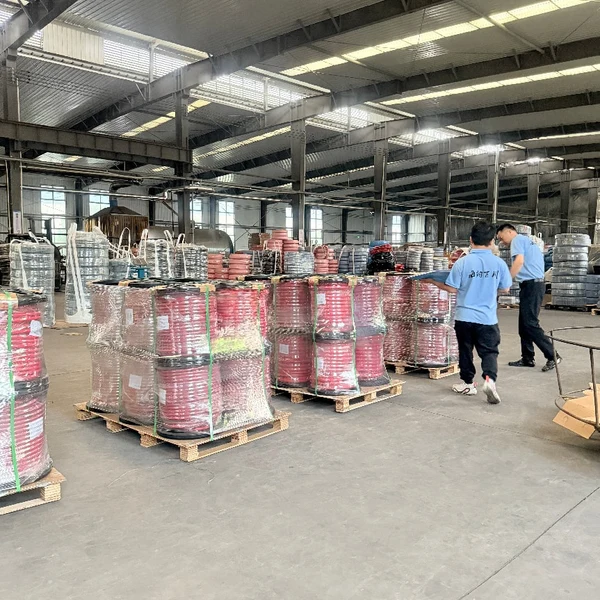
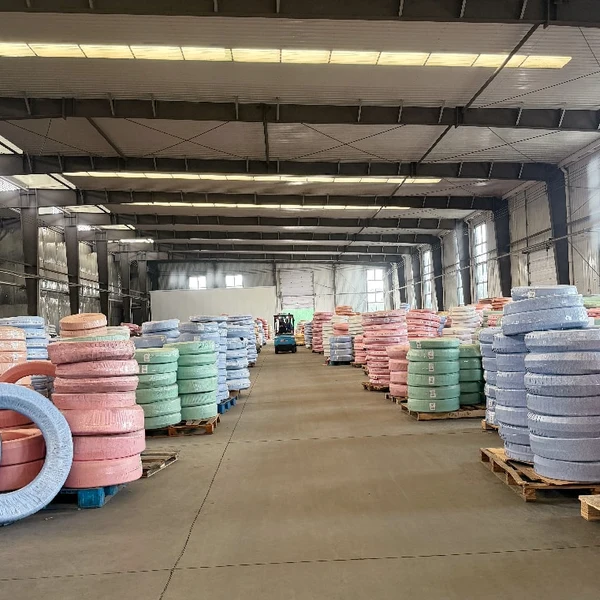
To implement these solutions in practice, it is extremely important to have a reliable partner. A striking example of such a professional approach is the companyZhengzhou Haida Hydraulic Technology Co.,Ltd. It is a specialized enterprise focusing on the field of hydraulic fluid transmission and control. The company is deeply rooted in the markets of Russia, Kazakhstan, Uzbekistan and other CIS countries, offering customers not just products, but comprehensive solutions. Specializing in key products such as hydraulic hoses, industrial tubing and ultra-high-pressure polymer hoses, Haida is committed to providing durable and efficient fluid handling solutions that meet the most stringent requirements of regional industrial sectors. Partnering with these suppliers, who have a deep understanding of local operating conditions, is key to the sustainability of your business.
Anatomy of Reliability: What is a Hydraulic Hose Made of?
To choose wiselyhigh pressure hydraulic hoses, you must first understand their internal structure. This is not just a piece of rubber pipe, but a complex engineering product consisting of three main layers, each of which performs its own unique function. Violation of the integrity of any of these layers leads to product failure.
Inner layer (Tube)
The inner layer is in direct contact with the working fluid. Its main task is to ensure tightness and chemical resistance. The material of the inner layer is selected strictly depending on the type of hydraulic fluid used. The most common material is synthetic rubber (such as NBR), which is highly resistant to mineral oils. However, other materials may be used for special applications:
- PTFE (Teflon):Used for harsh chemical environments, high temperature applications, or when exceptional flow purity is required (such as in the food processing or aerospace industries).
- Thermoplastics:Provide smooth internal surfaces, reducing flow turbulence and pressure loss.
- Special elastomers:Designed for use with biodegradable liquids (HETG), water-glycol emulsions (HFC) or phosphate esters (HFD).
It is important to remember: if the material of the inner layer is not compatible with the working fluid, it will begin to swell, crack or delaminate, which will inevitably lead to clogging of the system with decomposition products and subsequent rupture of the hose.
Reinforcement layer
These are the “muscles” of the hose that determine its ability to withstand high pressure. It is the reinforcing layer that bears the main load. Depending on the required operating pressure and flexibility, one of the following types of reinforcement is used:
- Wire Braid:Typically performed in one (1SN), two (2SN) or four layers. Braided hoses have good flexibility and resistance to impulse loads, but have limitations on the maximum operating pressure compared to spiral wound. They are ideal for mobile hydraulic systems where maneuverability and vibration resistance are important.
- Wire Spiral:Consists of four or six layers of wire wound in a spiral. Such hoses are designed for extremely high pressures and severe operating conditions (for example, in mining technology, metallurgy). They are less flexible than braided hoses, but have significantly greater tensile strength and better resistance to pressure pulsations.
- Textile reinforcement:Applies only to low pressure hoses and is not considered in this high pressure context.
The quality of steel, winding angle and weaving density directly affect durabilityhigh pressure hydraulic hoses.
Outer layer (Cover)
The outer layer protects the reinforcement from external influences: abrasion, ultraviolet radiation, ozone, moisture, oils and mechanical damage. Standard outer layers are made from oil- and weather-resistant synthetic rubber. However, in particularly aggressive environments, special coatings can be used:
- Increased wear resistance:For conditions where the hose constantly rubs against metal structures or the ground.
- Fire resistance:For work near sources of open flame or molten metal.
- Electrical conductivity:To prevent the accumulation of static electricity when pumping flammable liquids.
Often the outer layer is color-coded or printed with important information about the hose's performance, making identification and compliance easier.
Standards and labeling: The language of professionals
The hydraulic components market is global and strict international standards have been developed to avoid confusion. Understanding the labeling is the first step to making the right choice. Basic standards governing production and testinghigh pressure hydraulic hoses, are ISO (International Organization for Standardization), SAE (Society of Automotive Engineers, USA) and EN (European Norms).
ISO 1436 and SAE J517 standard
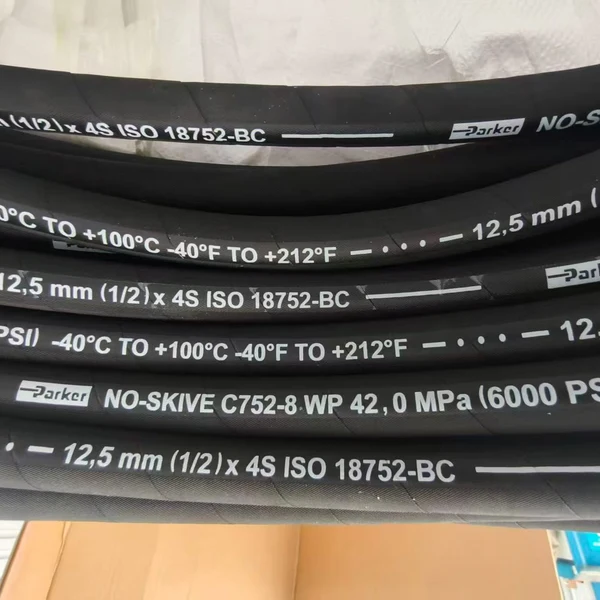
These documents classify hoses by design type, operating pressure and dimensions. The markings on the hose usually contain the following information:
- Hose type:For example, 1SN, 2SN, 4SP, 4SH. The number indicates the number of layers of reinforcement, and the letters indicate the type (N - braid, P/H - spiral).
- Nominal diameter:Often specified in inches (e.g. 1/2″, 3/4″) or according to the Dash Size standard (e.g. -08, -12). It is important to know the correspondence between these systems: -08 corresponds to 1/2 inch, -12 to 3/4 inch, and so on.
- Working pressure:Specified in bars (bar) or pounds per square inch (psi). For example, 420 bar or 6000 psi.
- Year and quarter of production:Critical for tracking expiration dates.
- Manufacturer name and standard:For example, “ISO 1436” or “SAE 100R2AT”.
Classification by series (using the example of popular types)
- Series 1SN/R1AT:One layer of steel braid. Working pressure up to 250-350 bar (depending on diameter). Suitable for return and low pressure lines.
- 2SN/R2AT Series:Two layers of steel braid. The most common type for mobile hydraulics. Working pressure up to 400-420 bar. Excellent balance of flexibility and strength.
- Series 4SP/R13:Four layers of spiral winding. For pressures up to 450 bar. More flexible analogue of the 4SH series.
- Series 4SH/R15:Four layers of high density spiral wound. For extreme pressures up to 450-500 bar and above. Used in heavy stationary equipment.
- R17 Series:Compact hoses with two layers of braid but smaller outer diameter at the same operating pressure as 2SN. Ideal for limited space.
When ordering or replacinghigh pressure hydraulic hosesnever go by the outer diameter or color alone. Always check the labeling and technical documentation of the equipment. Using a hose with insufficient pressure rating is a direct safety hazard.
Selection Factors: How to Find the Perfect Hose for Your Application
Choicehigh pressure hydraulic hosesis a multifactorial process that requires taking into account many parameters. An error in any of them can reduce the service life of the product significantly. Let's consider the key decision-making criteria.
1. Working pressure and safety factor
The first and most obvious parameter is the operating pressure of the system. The hose must be rated for pressures greater than the maximum operating pressure of the system. According to safety regulations, the test pressure of a hose is usually 2 times the working pressure, and the burst pressure is 4 times. However, one should take into account peak pressure surges (water hammer) that occur when the valves are suddenly closed or the movement of the cylinders is reversed. If the system experiences frequent water hammer, it is advisable to choose a hose with a higher pressure class or install pulsation dampers.
2. Fluid compatibility
As mentioned earlier, the chemical compatibility of the inner layer with the liquid is critical. You need to know exactly the type of oil:
- Mineral oils (HH, HL, HM, HV).
- Biodegradable oils based on esters (HEES) or vegetable oils (HETG).
- Water-glycol solutions (HFC).
- Synthetic fluids based on phosphate esters (HFD).
For example, standard nitrile rubber (NBR) degrades quickly when in contact with phosphate esters or some types of biodegradable oils. In such cases, a hose with an inner layer of FKM (Viton) or a special thermoplastic is required.
3. Temperature
Temperature affects both the hose itself and the viscosity of the fluid. There are two ranges to consider:
- Liquid temperature:Standard hoses typically operate between -40°C and +100°C. At temperatures above +120°C, special versions are required (for example, with a Teflon core).
- Ambient temperature:Working outdoors in the Siberian winter or near furnaces in a foundry requires special attention to the frost resistance of the outer layer and the heat resistance of the materials. Low temperatures make rubber brittle, while high temperatures accelerate aging and oxidation.
4. Flexibility and bending radius
Each type and size of hose has a minimum allowable bend radius. Exceeding this limit (kinking the hose) leads to flattening of the internal channel, disruption of flow, damage to the reinforcing layer and rapid failure. When laying the route, always allow for a margin in length to avoid tension and sharp corners. For complex trajectories, there are hoses with increased flexibility (for example, the Compact series or hoses with a special winding pitch).
5. External operating conditions
Where will the hose go? In a clean machine room or in a quarry full of abrasive dust? Will it be exposed to welding spatter, acids, salt water or ultraviolet light? For aggressive environments, choose hoses with a reinforced outer layer, protective covers (spiral or textile) or special coating. Ignoring external factors is one of the most common causes of premature wear.
6. Service life and impulse resistance
In systems with frequent on-off cycles or rapid changes in direction of movement (such as excavators or presses), the hose experiences millions of pressure pulsation cycles. A regular hose may not be able to withstand such a load. In such cases, it is necessary to select products with increased impulse resistance, which undergo additional testing according to ISO 6803 or SAE J343 standards. Often these hoses are labeled “Impulse Rated” or indicate the number of cycles (for example, 500,000 cycles at a certain pressure).
Installation, operation and maintenance: Rules for a long life
Even the most expensive and high-qualityhigh pressure hydraulic hosewill fail in a matter of days if it is not installed or operated correctly. Statistics show that up to 70% of hydraulic hose failures are due to installation and maintenance errors rather than manufacturing defects.
Installation rules
- Avoid twisting:When tightening fittings, the hose should not twist around its axis. Twisting even a few degrees significantly reduces the strength of the hose and can lead to rupture under pressure. Many hoses have a longitudinal indicator line; Make sure it does not spiral after installation.
- Observe bend radius:Never bend a hose with a radius less than specified. Use elbow adapters or swivel fittings to change the direction of flow rather than bending the hose itself.
- Remove tension:The hose should lie freely, with a slight sag (about 3-5% of the length) to compensate for changes in length under pressure and vibration. A stretched hose experiences constant tensile loads.
- Friction protection:If hoses cross or rub against the machine body, use protective sleeves, spiral wraps, or special separators. Friction quickly wears away the outer layer, exposing the reinforcement, which then corrodes.
- Correct length:Hose that is too long creates kinks that can become kinked or injure personnel. Too short and it gets tight. Calculate the length taking into account all movements of the mechanism in extreme positions.
Storage and shelf life
Rubber is a material that is subject to aging even without use. Shelf lifehigh pressure hydraulic hosesusually ranges from 5 to 10 years from the date of production (check with the manufacturer), but only if the storage conditions are met:
- A dark room, protected from direct sunlight and ozone sources (electric motors, welding machines).
- Temperature from -10°C to +25°C, humidity not more than 65%.
- Hoses should not lie coiled under load, bend or hang on nails. The best way is to store them on special racks in large rings or in direct packaging.
- Avoid contact with solvents, oils, chemicals during storage.
Always check the production date before installation. Using an expired hose is unacceptable.
Diagnostics and replacement
Regular visual inspection of hydraulic lines should be part of your maintenance routine. Look for the following signs of wear:
- Cracks in the outer layer (a sign of aging rubber or ozone/UV exposure).
- Swellings or “hernias” on the surface of the hose (a sign of damage to the inner layer or delamination).
- Scuffs to metal braid.
- Liquid leaks at fitting joints.
- Hose becomes stiff or discolored (a sign of overheating).
If any of these defects are detected, the hose must be replaced immediately. Do not attempt to repair damaged areas with electrical tape or zip ties - this is a temporary and dangerous measure. Replace the entire hose using quality fittings and professional crimping equipment.
Safety First: Risks and Accident Prevention
Working withhigh pressure hydraulic hosesinvolves serious risks. A hose rupture under pressure of 300-400 bar turns the stream of oil into a cutting tool that can penetrate human skin and tissue, causing severe injuries requiring amputation or leading to death. In addition, sprayed oil may ignite upon contact with hot surfaces.
Basic safety rules
- Pressure release:Before any work on the hydraulic system (replacing a hose, connecting a device), be sure to turn off the engine and release the residual pressure in the system by moving the distributor levers several times. Never unscrew fittings under pressure!
- Leak search:Never look for a leak with your bare hands. A high-pressure jet of oil may be invisible to the eye, but has enormous penetrating power. Use cardboard, a piece of wood, or a special leak detector.
- PPE:Personnel working with hydraulics must be provided with personal protective equipment: goggles, oil-resistant gloves, and overalls.
- Protective covers:In high-risk areas (where there are people nearby), it is recommended to install protective covers on the hoses, which, in the event of a rupture, will contain the stream and prevent fragments from flying away.
A plant safety culture begins with an understanding of the physics of the process and respect for the energy contained in the hydraulic system. Properly selected and installedhigh pressure hydraulic hosescombined with proper operation, they reduce risks to a minimum.
Trends and future of hydraulic hoses
The hydraulic components industry does not stand still. Current trends are aimed at increasing environmental friendliness, reducing weight, increasing service life and integrating monitoring systems.
Environmental friendliness:As environmental regulations become more stringent, demand for hoses that are compatible with biodegradable fluids, as well as hoses themselves made from recyclable materials, is growing. Manufacturers are developing new rubber compounds that reduce the harmful impact on the environment during disposal.
Lightweight and compact:In mobile technology, every kilogram counts. The development of new high-strength synthetic fibers for reinforcement makes it possible to create hoses with the same operating pressure, but with lower weight and outer diameter, which simplifies machine layout.
Smart hoses:Technologies are emerging for integrating sensors directly into the design of a hose or fitting. Such systems can monitor pressure, temperature, vibration and wear in real time, transmitting data to the machine control system. This allows you to move from preventive maintenance to condition-based maintenance, preventing accidents before they occur.
Durability:Improving vulcanization technologies and material composition allows us to constantly increase the service life of hoses, especially in terms of resistance to impulse loads and aggressive environments.
Conclusion
Choicehigh pressure hydraulic hosesis not just a purchase of consumables, it is an investment in the reliability, safety and efficiency of your equipment. Errors at the selection or installation stage can be very costly, measured not only in financial losses from downtime, but also in human lives.
Remember the basic principles: carefully analyze the operating conditions (pressure, fluid, temperature, external environment), strictly adhere to labeling standards, pay special attention to the quality of installation and regularly inspect the condition of the lines. Trust products to trusted manufacturers with the necessary certificates and reputation in the market, such as Zhengzhou Haida Hydraulic Technologies LLC, who have proven their ability to provide reliable solutions for the difficult conditions of the CIS countries.
The hydraulic hose is the connecting link that provides the power and precision of modern technology. Treat his choice with the responsibility that this critical detail requires. Competent approach to usehigh pressure hydraulic hoseswill be the key to the stable operation of your business for many years.