-


-


-


-


whatsapp

-
WeChat


Hydraulic hose for a tractor: how to choose and replace correctly
2026-04-26
- How to choose a hydraulic hose for a tractor: three numbers that cannot be ignored
- Why “fits true to size” is the most dangerous phrase in the workshop
- How to replace a hydraulic hose on a tractor: a checklist from practice
- When is it worth contacting a specialist - and why “doing it yourself” is not always faster
The hydraulic hose on the tractor is not a rubber tube. This is a critically loaded element of the hydraulic system, on which the lifting of the plow, the release of pressure in an accident, and the accuracy of control of attachments depend. We have replaced more than 12,000 of these hoses in the fields of the Krasnodar Territory, Altai Territory and the Republic of Bashkortostan. In every third case there is a premature rupture, in every fifth there is a leak in the connection. The reason is almost always the same: the choice is based on price, not parameters.
How to choose a hydraulic hose for a tractor: three numbers that cannot be ignored
The first thing we check before selecting is not the make of the tractor, but the operating parameters of the hydraulic system. The MTZ-82 has a pressure of up to 20MPa, the John Deere 8R has a pressure of up to 35MPa, and the new Claas Axion has a pressure of up to 42MPa. A hose designed for 25 MPa will fail in 3-4 months. We record this in the service log:maximum working pressure, peak impulse pressure, oil temperature.
The second is the design. A standard hydraulic hose for a tractor consists of five layers: an inner elastomer (usually NBR), two reinforcement frames (high tensile steel wire), a buffer layer and an outer jacket (UV protective rubber). If the catalog says “one frame”, it is not for a tractor. Agricultural machinery requires a minimum of two cross frames in accordance with GOST R ISO 1436–2019 or SAE 100R2AT.
Third is the type of connection. At MTZ and T-150, threaded fittings of the JIC 37° or ORFS type are most often used. On foreign equipment - Metric DIN 20022 or BSP. We saw a mechanic install a JIC hose onto a BSP port and within a week it started leaking oil under pressure. Check the cone angle, thread pitch and seal class - these are not trifles. This is a guarantee that the hose will not shoot off when lifting the heavy cultivator for the first time.
Why “fits true to size” is the most dangerous phrase in the workshop
Some people think: if the diameter of the hose matches, and the length allows installation without tension, then it fits. But we encountered a situation on a farm in the Orenburg region: the client bought a hose “based on the sample”, but with a different type of reinforcement. After 47 hours of operation, it burst in the bending area. The reason was not the size, butminimum bend radius. For a hose with double-frame reinforcement it is 12×D (where D is the internal diameter), for a single-layer hose it is 8×D. When placed rigidly in the tractor frame, this led to microcracks in the frame.
Another common mistake is ignoring compatibility with hydraulic oil. Not all hoses can withstand modern AW and HVLP oils with additives. We have test data: hoses with an inner layer of EPDM are resistant to water and paraffin oils, but lose their tightness in mineral oils with zinc additives. For tractors with hydraulic systems running Shell Rimula or Castrol Tractor Fluid, we recommend only NBR or a specialized FKM elastomer.
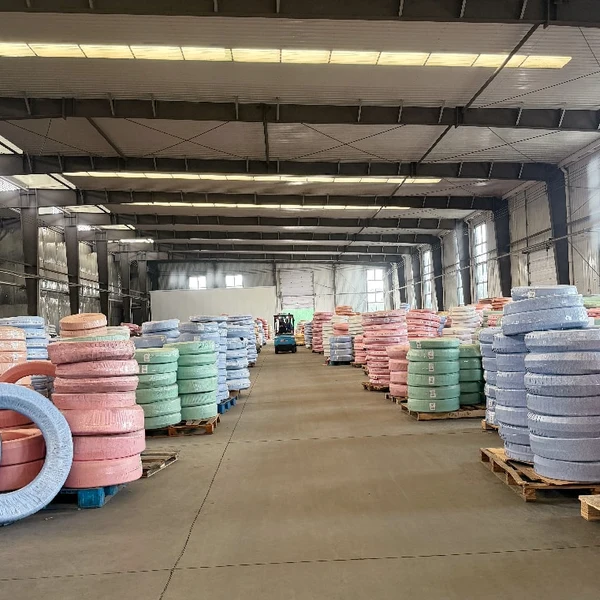
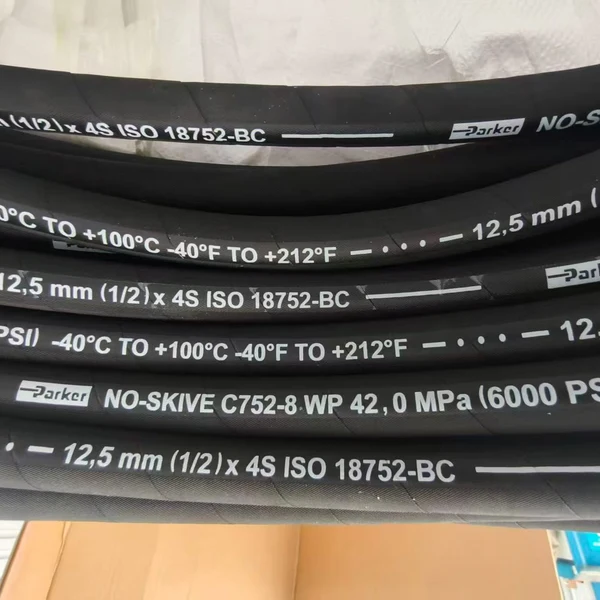
And one more thing: color doesn’t matter. The red hose is not “for high pressure”, the blue one is not “for cold”. Color - manufacturer's marking. And the real parameters are on the tag: for example, “100R16–16×2.5–35 MPa–100°C.”
How to replace a hydraulic hose on a tractor: a checklist from practice
Replacement is not just “unscrew and tighten.” This is the sequence where an error at one stage leads to a crash:
- Turn off the hydraulic system: stop the engine, relieve pressure through the manual valve, lock the control levers;
- Drain the oil: Even 200 ml of residue in the hose can cause an air lock after replacement;
- Inspect the fittings: if there are wear or cracks on the threads, replace them together with the hose;
- Install with extra length: the hose should have a sag of 3–5% of the free length - this way it compensates for thermal expansion and vibration;
- Tighten with a wrench: overtightening deforms the o-ring, undertightening causes a leak. For M22×1.5 the standard is 220 Nm;
- Bleed the system: Start the engine at idle speed, smoothly turn on each hydraulic device 3-5 times, check the connections for dryness.
We introduce this checklist into the training for technicians of Zhengzhou Haida Hydraulic Technology Co., Ltd., an enterprise specializing in hydraulic fluid transmission and control. Experience shows: compliance with all points reduces the number of repeat requests by 78%.
When is it worth contacting a specialist - and why “doing it yourself” is not always faster
If the hose is damaged in the field, you can temporarily install a repair kit with a crimp clamp. But this is a solution for 1–2 days. Continuous operation with such repairs is prohibited by GOST R 55747–2013: the risk of explosion during a sudden pressure surge increases by 4.7 times.
If you have an electro-hydraulic tractor (such as a New Holland T7), the hose may be part of a circuit with pressure sensors and feedback. Here, an error in selection does not lead to a leak, but to a malfunction of the ECU. In this case, we always recommend ordering the hose using the original OEM number or with prior consultation with an engineer.
A hydraulic hose for a tractor is not a consumable, but a safety element. Its selection requires an understanding of fluid dynamics, materials science and operating practices. We help you select an exact analogue, test it in the laboratory and deliver it to the region - without further ado and without compromises on reliability.